


Two names dominate prop trading discussions in 2026: FundedNext and FTMO. Both firms offer funded accounts, but they take different approaches to trader evaluation and profit sharing.
FTMO focuses on strict rules and proven models. FundedNext offers more flexibility with instant funding options. The choice between them depends on your trading style and risk tolerance.
This comparison breaks down every key difference. You'll learn about challenge structures, payout speeds, and hidden costs. By the end, you'll know which firm matches your trading goals.
FTMO uses a traditional two-step challenge model. Traders must pass a profit target phase, then a verification phase. The process typically takes 30-60 days to complete.
FundedNext offers three different pathways. Their standard two-step challenge mirrors FTMO's approach. But they also provide a one-step challenge and an instant funding option.
The instant funding sets FundedNext apart. Traders can start with real capital immediately after paying the fee. No evaluation period required.
| Challenge Type | FTMO | FundedNext |
|---|---|---|
| Two-Step Challenge | ✓ Available | ✓ Available |
| One-Step Challenge | ✓ Available (New 2026) | ✓ Available |
| Instant Funding | ✗ Not Available | ✓ Available |
| Evaluation Time | 30-60 days | 0-60 days |
Based on typical prop trading firm structures, FTMO's rules are stricter during evaluation. They enforce a maximum daily loss limit of 5% and overall drawdown of 10%. FundedNext uses similar limits but offers more flexibility in their instant funding accounts.
Based on typical evaluation structures, FTMO requires an 8% profit target in phase one, followed by 5% in verification. Both phases have 30-day time limits. Traders cannot hold positions over weekends during evaluation.
FundedNext matches these targets for their two-step challenge. Their one-step challenge requires 10% profit in 30 days. Instant funding accounts have no profit targets - you start trading immediately.
Weekend holding rules differ between firms. FTMO is stricter about weekend positions during challenges. FundedNext allows weekend holds in most account types.
Both firms offer account sizes from $10,000 to $400,000. Industry estimates suggest FTMO caps their largest accounts at $400,000. FundedNext extends to $400,000 but also offers smaller $5,000 starter accounts.
The scaling approaches differ significantly. Industry estimates suggest FTMO increases account size by 25% of the original amount with each scale-up. A $100,000 account grows to $125,000, then $150,000, and so on.
Based on typical scaling models, FundedNext uses a more aggressive scaling model. They double the account size on the first scale-up, then add 25% afterward. A $100,000 account jumps to $200,000, then $250,000.
FTMO offers six main account sizes: $10k, $25k, $50k, $100k, $200k, and $400k. Each account follows the same percentage-based rules and profit splits.
FundedNext provides more variety. They offer Express ($5k-$15k), Standard ($25k-$200k), and Stellar accounts (up to $400k). Each tier has different features and requirements.

FTMO starts with an 80/20 profit split favoring the trader. This increases to 90/10 after the first payout. All funded traders receive the higher split from their second payout onward.
FundedNext offers 80/20 splits on most challenges. Their instant funding accounts provide 50/50 splits initially. This lower split offsets the risk of providing immediate capital access.
Payout frequency matters for active traders. FTMO processes payouts every 14 days minimum. FundedNext allows daily payouts for verified traders who meet minimum thresholds.
According to Reddit traders, "FundedNext payouts are smooth, rules are fair and scaling is easy" compared to FTMO's more rigid structure.
Based on typical prop firm pricing, FTMO charges a one-time fee for challenges. A $100,000 challenge costs $588.75. This includes both evaluation phases and the first month of funded trading.
FundedNext prices their challenges competitively. Their $100,000 challenge costs $549, slightly undercutting FTMO's pricing.
Monthly fees apply after funding. FTMO doesn't charge monthly fees for funded accounts. FundedNext charges $25-75 monthly depending on account size and type.
Reset fees vary between firms. Based on typical prop firm policies, FTMO allows one free reset per challenge, then charges 50% of the original fee. FundedNext offers unlimited resets at 80% of the original price.
Both firms provide access to MetaTrader 4 and 5 platforms. FTMO also supports cTrader for traders who prefer that interface. FundedNext focuses exclusively on MetaTrader platforms.
Execution speed matters for scalpers and algorithmic traders. FTMO routes through multiple liquidity providers for competitive spreads. FundedNext uses similar infrastructure but with fewer provider relationships.
Here's where becomes relevant. Both firms offer institutional-grade execution that retail brokers often cannot match.
FTMO provides access to forex, indices, commodities, and cryptocurrencies. They offer over 100 trading instruments across these asset classes.
FundedNext focuses primarily on forex and indices. They provide fewer cryptocurrency options than FTMO. Commodity selection is also more limited.
Leverage limits differ slightly. FTMO caps leverage at 1:100 for funded accounts. FundedNext allows 1:100 for forex but reduces leverage on indices and commodities.
FTMO has built a comprehensive education program. They offer daily market analysis, trading psychology courses, and risk management workshops. Their Discord community is active with thousands of members.
FundedNext takes a more streamlined approach to education. They provide basic trading materials and market updates. Their support team responds quickly, but educational resources are more limited.
Customer service quality varies based on trader feedback. FundedNext maintains a 4-star Trustpilot rating with generally positive reviews about support response times.
FTMO's support receives mixed reviews. Their knowledge base is comprehensive, but response times can extend during busy periods. Live chat availability is limited to business hours.

Industry estimates suggest 15-20% of traders pass FTMO challenges. The firm doesn't publish official success rates, but community data supports these figures.
FundedNext claims higher pass rates for their instant funding option. Since there's no evaluation period, more traders access capital initially. However, long-term retention may be lower due to the 50/50 profit split.
Payout reliability is crucial for serious traders. Both firms have established track records of paying successful traders. FTMO has processed over $200 million in payouts since 2015.
FundedNext, despite being newer, has already paid millions to traders. Their faster payout processing appeals to traders who need regular income from their trading.
Risk management violations cause most challenge failures. FTMO's daily loss limit catches many traders off guard. A single bad day can end a challenge attempt.
FundedNext sees similar patterns but with some variation. Their instant funding accounts fail more often due to inadequate risk controls from unprepared traders.
Consistency requirements trip up both sets of traders. Many traders hit profit targets but fail consistency rules. The best 5 trading days cannot exceed 50% of total profits.
FTMO provides limited API access for algorithmic traders. Their platform supports Expert Advisors (EAs) with some restrictions during evaluation phases.
FundedNext allows EA trading across all account types. They place fewer restrictions on automated trading strategies during challenges.
Both firms monitor for prohibited trading practices. Copy trading is banned, and unusual correlation between accounts triggers investigation.
Data feed quality affects strategy performance. FTMO uses tier-1 liquidity providers for competitive pricing. FundedNext's data feeds are reliable but may have slightly wider spreads during volatile periods.
FTMO accepts traders from most countries worldwide. They exclude certain jurisdictions due to regulatory restrictions, including the United States and some African nations.
FundedNext has broader geographic availability. They accept US traders and operate in regions where FTMO doesn't provide services.
Regulatory oversight differs between firms. FTMO operates under Czech National Bank supervision. FundedNext is registered in the UAE with different regulatory requirements.
Tax implications vary by location. Neither firm provides tax advice, but payout structures affect how profits are classified in different jurisdictions.
Choose FTMO if you prefer established processes and comprehensive education. Their track record spans nearly a decade, and their support infrastructure is mature.
Pick FundedNext if you want faster access to capital and more flexible scaling. Their instant funding option eliminates evaluation waiting periods entirely.
Conservative traders should lean toward FTMO. Their rules are strict but predictable. Trader feedback suggests FTMO is "tougher with higher targets and strict rules, but predictable if you stick to the plan."
Aggressive traders may prefer FundedNext's scaling model and payout flexibility. The ability to double account size quickly appeals to growth-focused traders.
For more detailed analysis of prop trading options, check out our comprehensive that covers additional firms worth considering.
| Best For | FTMO | FundedNext |
|---|---|---|
| New Traders | ✓ Better education | ✗ Less guidance |
| Experienced Traders | ✓ Proven model | ✓ More flexibility |
| Quick Capital Access | ✗ 30-60 day wait | ✓ Instant funding |
| Long-term Growth | ✗ Slower scaling | ✓ Aggressive scaling |
| Risk-Averse | ✓ Predictable rules | ✗ More variables |
Both firms serve different trader personalities and goals. Neither choice is objectively wrong. Your trading style and risk tolerance should guide the decision.
FundedNext offers more frequent payouts with daily withdrawal options for verified traders. FTMO processes payouts every 14 days minimum. Both firms have reliable payout histories, but FundedNext provides faster access to profits.
Both FTMO and FundedNext restrict news trading during evaluation phases. FTMO prohibits trading 2 minutes before and 10 minutes after high-impact news. FundedNext extends this restriction to 15 minutes after news events. Once funded, both firms allow news trading.
Yes, both firms permit Expert Advisors (EAs) and algorithmic trading. FundedNext places fewer restrictions on automated strategies during challenges. FTMO allows EAs but monitors for prohibited practices more strictly during evaluation phases.
Based on typical prop firm fee structures, FundedNext has slightly lower challenge fees - $549 for a $100k challenge versus FTMO's $588.75. However, FundedNext charges monthly account maintenance fees ($25-75) while FTMO doesn't charge monthly fees for funded accounts. Total costs depend on how long you hold the funded account.
FundedNext accepts US traders without restrictions. FTMO excludes US traders from their program due to regulatory limitations. US traders must choose FundedNext or seek alternative prop firms that accept American participants.
FundedNext offers more aggressive scaling - they double account size on first scale-up, then add 25%. FTMO increases accounts by 25% of original size with each scale-up. A $50k account reaches $156,250 with FundedNext versus $87,500 with FTMO after three scale-ups.
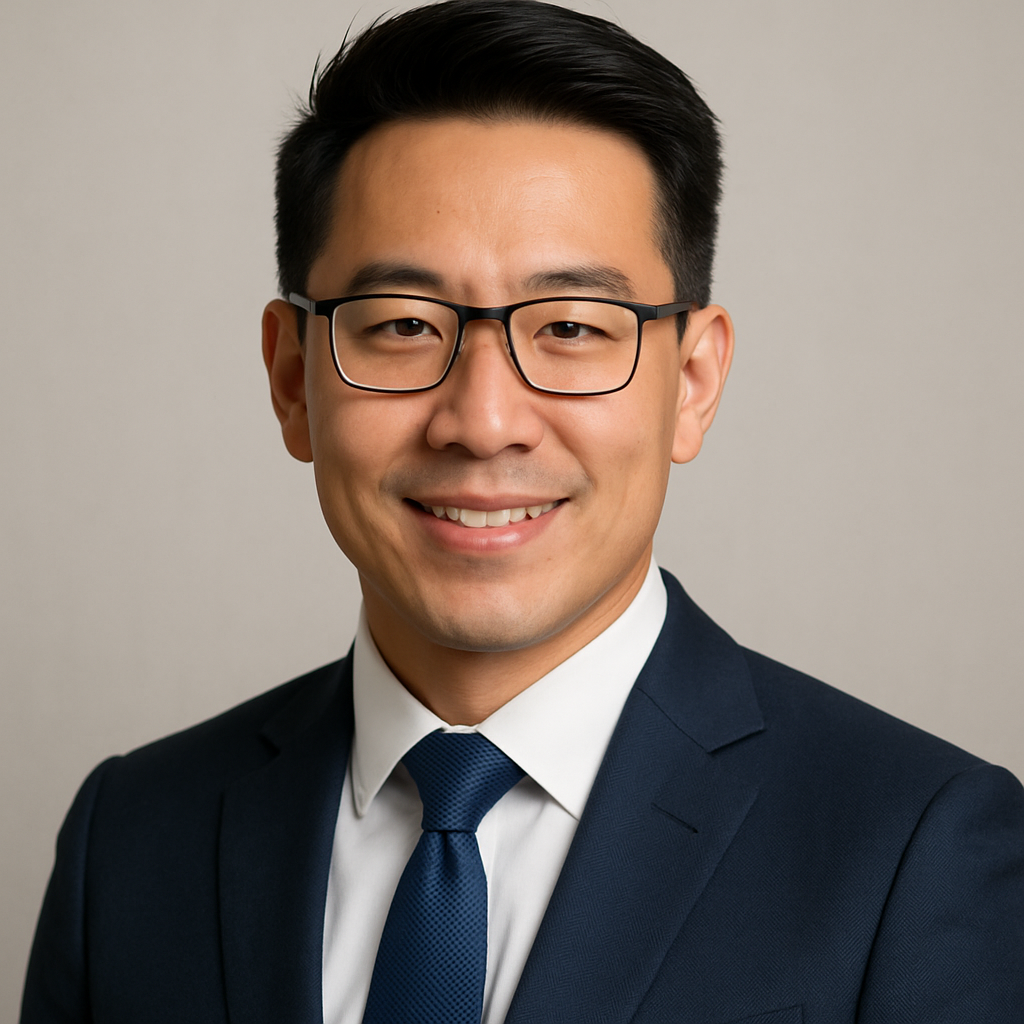
Senior Trading Education Specialist
Marcus Chen has spent over 12 years developing forex education programs for institutional traders and prop firms. His systematic approach to breaking down complex trading concepts has helped thousands of traders transition from retail to professional-grade execution.