 NextTrade Broker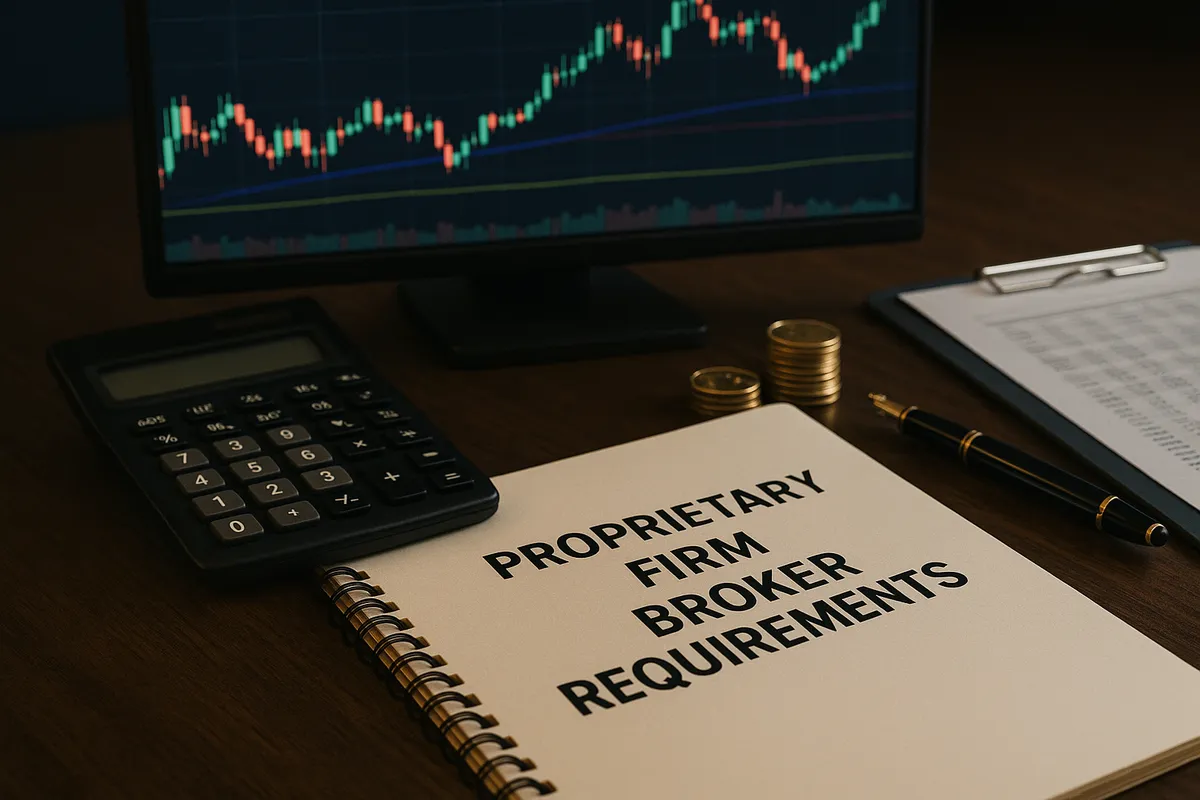
Prop firm broker requirements for Trading Instruments: Financials vary dramatically across different firms and asset classes. Most retail prop firms require traders to demonstrate proficiency with forex, indices, and commodities before accessing advanced instruments like exotic currency pairs or individual stocks.
The basic entry criteria haven't changed much in 2026. You need trading experience, Risk Management skills, and capital preservation discipline. But here's what nobody talks about — the specific instrument access requirements can make or break your trading strategy.

Sarah Martinez discovered this the hard way. She passed two prop firm evaluations with flying colors, trading EUR/USD and Gold. But when she tried to access the GBPJPY pair for her scalping strategy, both firms had different instrument restrictions. Based on typical firm requirements, one required a $10,000 account minimum for exotic pairs. The other needed three months of profitable trading history first.
Every prop firm has minimum standards that traders must meet. These requirements protect both the firm's capital and ensure traders understand market dynamics before accessing larger accounts or specialized instruments.
Age restrictions are universal — you must be 18 or older in most jurisdictions. According to industry standards, traders also need legal compliance with their local trading regulations.
Educational background matters less than practical knowledge. Most firms test your understanding of leverage, margin requirements, and risk-reward ratios through their evaluation process rather than requiring formal finance degrees.
| Requirement Category | Typical Standard | Verification Method |
|---|---|---|
| Minimum Age | 18 years old | Government ID verification |
| Trading Experience | 6+ months documented trading | Account statements or demo history |
| Risk Management Knowledge | Basic understanding of position sizing | Evaluation challenge performance |
| Capital Requirement | $100-500 evaluation fee | Payment processing verification |
The evaluation process reveals your instrument proficiency. Most firms start you with major currency pairs and basic indices. You prove yourself there before accessing more volatile instruments.
Forex remains the primary focus for most prop firms in 2026. The currency market's 24-hour nature and high liquidity make it ideal for demonstrating consistent trading skills across different Market Conditions.
major currency pairs — EUR/USD, GBP/USD, USD/JPY, and AUD/USD — typically have the lowest access barriers. These pairs offer tight spreads and predictable volatility patterns that help firms assess your Risk Management capabilities.
But here's where most traders get tripped up. Minor pairs like EUR/GBP or AUD/JPY often require higher account sizes or proven profitability records. The reduced liquidity and wider spreads make these instruments riskier for new funded traders.
Leverage restrictions vary significantly between firms. While some offer up to 1:100 leverage on majors, others cap it at 1:30 for Risk Management. Regulatory differences between jurisdictions also impact available leverage levels.
Cross-currency analysis becomes crucial when trading multiple forex instruments. Understanding correlation patterns between EUR/USD and GBP/USD prevents overexposure to similar market movements that could amplify losses.
Index trading through CFDs has become increasingly popular among prop traders. The S&P 500, NASDAQ 100, and Dow Jones provide excellent opportunities for both day trading and swing trading strategies.
Most firms require successful forex trading experience before granting index access. The different market hours and volatility patterns demand adjusted Risk Management approaches compared to currency trading.
Individual stock access remains limited across most retail prop firms. Industry regulations make it complex for smaller firms to offer comprehensive stock markets without significant licensing requirements.
Here's what changed in 2026 — more firms now offer sector-specific index access. Instead of just broad market indices, you can trade technology-focused ETFs or commodity sector indices with specialized knowledge in those areas.
Position sizing becomes more critical with indices due to higher contract values. Based on typical contract specifications, a 1% move in the S&P 500 represents significantly more dollar risk than the same percentage move in EUR/USD.
Gold and oil dominate the commodities space for most prop firms. These instruments offer unique trading opportunities but require different analytical approaches than forex or indices.
Gold trading often serves as a gateway to other precious metals. Most firms start you with XAUUSD before allowing access to silver, platinum, or palladium. The volatility patterns and correlation with global economic events make gold an excellent skill-building instrument.
Oil markets present timing challenges that many forex traders struggle with initially. WTI crude and Brent crude have specific seasonal patterns and geopolitical sensitivities that don't exist in currency markets.
According to recent industry analysis, traders who specialize in 1-2 commodity instruments consistently outperform those who trade the full range of available commodities without deep market understanding.
Storage costs and rollover dates for commodity futures create additional complexity. Understanding contango and backwardation becomes essential for longer-term commodity positions that many prop firms now allow.
Agricultural commodities like wheat, corn, and soybeans require seasonal knowledge that most retail traders lack. These instruments typically have higher account requirements and more restrictive position limits.
Cryptocurrency access through prop firms remains limited but growing in 2026. Bitcoin and Ethereum represent the primary crypto instruments available to funded traders.
The 24/7 nature of crypto markets creates unique challenges for Risk Management. Weekend gaps that don't exist in forex can create significant overnight exposure that violates traditional risk rules.
Most firms require demonstrated profitability in traditional instruments before allowing crypto access. The extreme volatility and news-driven price movements make cryptocurrencies unsuitable for inexperienced funded traders.
Leverage restrictions on crypto instruments typically max out at 1:10 compared to 1:100 available for major currency pairs. The reduced leverage helps control the amplified risk from crypto's natural volatility.
Scaling to advanced instruments requires consistent profitability and Risk Management demonstration. Most firms use tiered access systems that unlock additional instruments based on your trading performance.
The progression typically follows this pattern: major forex pairs → indices → minor forex pairs → commodities → exotic instruments. Each tier requires 30-90 days of profitable trading in the previous tier.
Account size determines ultimate instrument access in many firms. Industry estimates suggest a $10,000 funded account might restrict you to major pairs and basic indices, while $100,000 accounts unlock the full instrument range.
For Serious Traders looking to scale their operations, understanding these progression requirements becomes critical for long-term planning. can significantly impact your instrument access timeline.
| Account Size | Available Instruments | Maximum Position Size |
|---|---|---|
| $10,000 | Major forex, Gold, SPX500 | 2% account risk per trade |
| $25,000 | All forex pairs, major indices, Oil | Based on typical risk management practices, 1.5% account risk per trade |
| Based on typical requirements, $50,000 | Full instrument access except crypto | 1% account risk per trade |
| Industry estimates suggest $100,000+ | Complete instrument suite including crypto | Industry estimates suggest 0.5% account risk per trade |
Trading Platform compatibility affects instrument access more than most traders realize. MetaTrader 4 and 5 remain industry standards, but advanced instruments often require specialized platforms.
execution speed becomes critical when trading fast-moving instruments like indices during news events. Sub-12ms execution speeds can make the difference between profitable scalping and constant slippage losses.
API access for algorithmic trading remains limited across most retail prop firms. Traders developing automated strategies need to verify API availability for their specific instruments before committing to evaluation challenges.
Multiple platform access helps diversify execution risk. Having both MetaTrader and cTrader access ensures you can continue trading even if one platform experiences technical issues during volatile market periods.
Risk management requirements vary significantly between instrument types. Industry estimates suggest currency pairs might allow 2% account risk per trade, while volatile indices require maximum 1% risk limits.
Based on typical risk management protocols, daily loss limits range from 3-5% of account value regardless of instruments traded. However, maximum position sizes change based on instrument volatility and correlation patterns.
Correlation risk becomes crucial when trading multiple instruments simultaneously. Holding long EUR/USD and long GBP/USD positions essentially doubles your exposure to USD weakness rather than diversifying risk.
Overnight holding requirements differ between instruments and firms. While some allow overnight forex positions, others require closing all index positions before market close to prevent gap risk exposure.
The biggest mistake new funded traders make is trying to trade every available instrument rather than mastering a focused selection. Spreading attention across forex, indices, and commodities prevents developing deep market expertise in any single area.
Ignoring correlation relationships creates hidden risk exposure. Trading EUR/USD, GBP/USD, and EUR/GBP simultaneously might seem like diversification but actually concentrates risk in European economic events and USD movements.
Many traders underestimate the learning curve required for different instrument types. Gold's reaction to inflation data differs completely from how EUR/USD responds to European Central Bank announcements.
Chasing high-volatility instruments like exotic currency pairs often leads to account blowouts. The increased profit potential comes with proportionally higher risk that most risk management systems can't handle effectively.
Failing to account for trading session overlaps causes execution problems. Trading AUD/JPY during European hours often results in wider spreads and reduced liquidity compared to Asian session trading.
Most prop firms offer major and minor forex pairs, popular stock indices like S&P 500 and NASDAQ, precious metals (Gold, Silver), and energy commodities (Oil). Advanced instruments like exotic currency pairs and cryptocurrencies typically require larger account sizes or proven profitability.
No, most prop firms only require demonstrated competency in basic instruments like major forex pairs during the evaluation process. Additional instruments unlock as you prove consistent profitability and proper risk management with simpler instruments.
Limited cryptocurrency trading is available through some prop firms in 2026, typically Bitcoin and Ethereum only. Most require successful traditional instrument trading first and offer reduced leverage (usually 1:10 maximum) compared to forex instruments.
Larger funded accounts typically unlock more trading instruments and higher position limits. A $10,000 account might restrict you to major forex pairs and basic indices, while $100,000+ accounts often provide access to exotic pairs, individual stocks, and cryptocurrency instruments.
You'll need to either switch to a prop firm that offers your desired instruments or maintain a separate personal trading account for those instruments. Some traders use multiple prop firm accounts to access different instrument selections across various firms.
Most prop firms include all available instruments in their standard fee structure without additional charges per instrument type. However, some firms may have higher evaluation fees for accounts that include premium instruments like individual stocks or cryptocurrencies.
Trading Success Journalist
Sarah Rodriguez chronicles the real experiences of professional traders, from prop firm challenges to scaling successful algorithms. Her compelling narratives reveal the human side of high-stakes trading while maintaining focus on actionable insights and measurable outcomes.
