 NextTrade Broker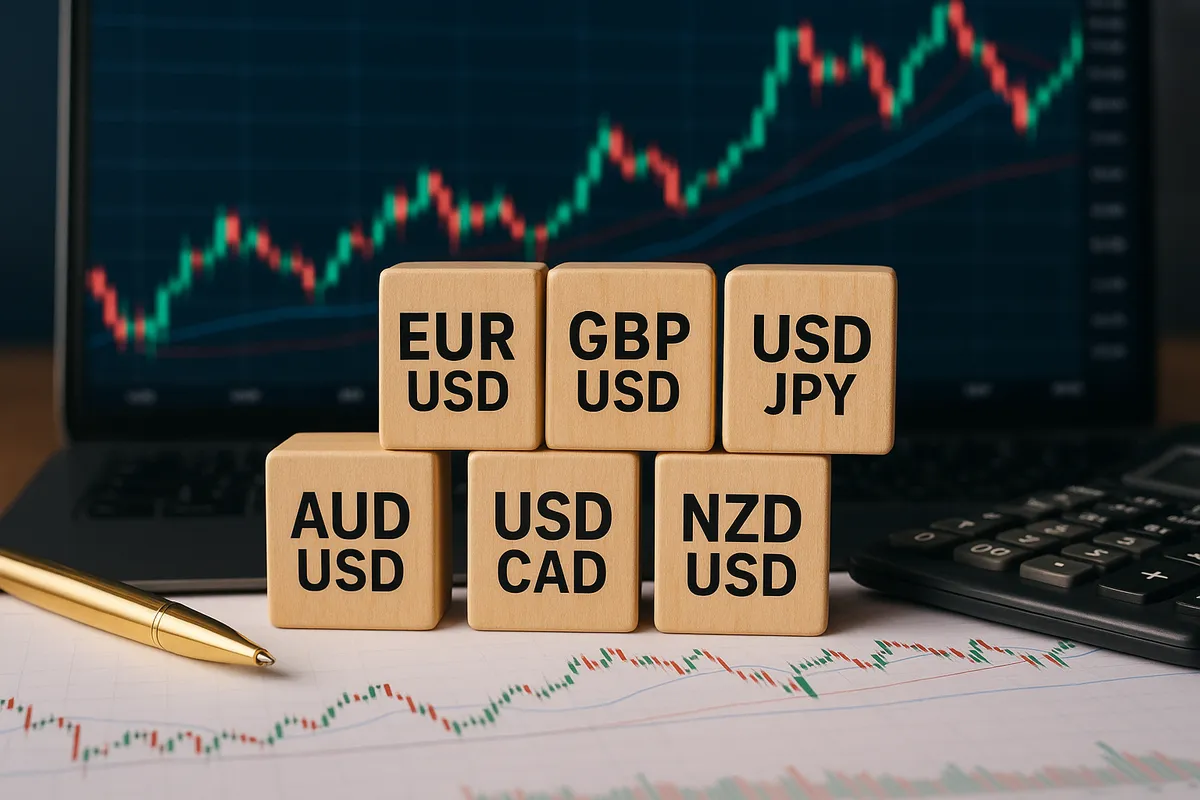

Last updated
Last updated
Major currency pairs are the most traded currency pairs in the forex market. They involve the US dollar and six other major world currencies. Based on typical market analysis, these pairs account for nearly 80% of all forex trading volume.
The four traditional major pairs are EUR/USD, GBP/USD, USD/JPY, and USD/CHF. Three additional pairs — AUD/USD, USD/CAD, and NZD/USD — are also widely considered majors. They offer tight spreads, high liquidity, and predictable price movements.

trading major pairs gives you several advantages. You get lower transaction costs, faster order fills, and more reliable technical analysis. The high trading volume means your orders execute quickly, even during volatile Market Conditions.
Based on typical forex market data, the EUR/USD dominates forex trading with over 24% of daily volume. Known as the "Fiber," this pair reflects the economic relationship between Europe and America. It moves predictably during European and US trading sessions.
Industry estimates suggest the GBP/USD, nicknamed the "Cable," represents about 9% of forex volume. British economic data and Brexit developments drive this pair's volatility. It offers excellent trading opportunities during London hours.
Based on typical market analysis, USD/JPY accounts for roughly 13% of daily trading. The "Ninja" responds strongly to US-Japan interest rate differentials. Bank of Japan interventions can create sudden price spikes.
USD/CHF makes up about 4% of forex volume. The "Swissie" serves as a safe-haven currency during market stress. Swiss National Bank policies significantly impact this pair's direction.
| Currency Pair | Nickname | Daily Volume % | Average Spread | Best Trading Hours |
|---|---|---|---|---|
| EUR/USD | Fiber | 24.0% | 0.1-0.3 pips | London/New York |
| GBP/USD | Cable | 9.6% | 0.2-0.5 pips | London session |
| USD/JPY | Ninja | 13.2% | 0.1-0.3 pips | Tokyo/London |
| USD/CHF | Swissie | 4.0% | 0.3-0.8 pips | London session |
AUD/USD represents the Australian dollar against the US dollar. This pair moves with commodity prices, especially gold and iron ore. Australian employment data and Reserve Bank decisions drive major moves.
The "Aussie" correlates strongly with Asian market sentiment. When China's economy grows, AUD/USD typically rises. Mining company earnings also influence this pair's direction.
USD/CAD reflects the relationship between US and Canadian economies. Oil prices heavily influence this pair since Canada exports significant crude oil. Bank of Canada rate decisions create trading opportunities.
NZD/USD, known as the "Kiwi," follows agricultural commodity prices. New Zealand's dairy exports affect this pair's movements. The Reserve Bank of New Zealand's hawkish stance often supports the currency.
Liquidity stands as the primary advantage of major currency pairs. High trading volume means your orders fill quickly at expected prices. Market makers compete aggressively, keeping spreads tight throughout most trading sessions.
The deep liquidity prevents large price gaps during normal market conditions. Your stop losses and take profits execute closer to intended levels. This reliability helps you manage risk more effectively.
News flow and analysis coverage favor major pairs. Every central bank meeting, employment report, and inflation data gets extensive coverage. You have access to better fundamental analysis than with exotic pairs.
Professional Traders allocate 70-80% of their forex portfolio to major pairs. The predictable behavior and tight spreads give them a statistical edge over time.
Technical analysis works more reliably on major pairs. Support and resistance levels hold better due to high participation. Chart patterns complete more frequently, giving you clear entry and exit signals.
Each major pair has optimal trading windows based on when their respective markets are active. The London session drives EUR/USD and GBP/USD volatility. Most significant moves occur between 3:00 AM and 12:00 PM EST.
USD/JPY performs best during Tokyo and London overlap hours. Asian economic data releases create the strongest moves. The 2:00 AM to 4:00 AM EST window often produces breakout opportunities.

The New York session affects all USD pairs significantly. US employment data, Federal Reserve speeches, and GDP releases move markets. The 8:30 AM EST news releases often trigger major directional moves.
Avoid trading major pairs during low-volume periods like the Asian afternoon. Spreads widen and false breakouts increase. The Sunday night opening can also produce erratic price action.
Position sizing becomes critical when trading major pairs with high leverage. Industry best practices suggest a 1% account risk per trade rule keeps you in the game during losing streaks. Calculate your position size before entering any trade.
Stop losses work more reliably on major pairs than exotics. Set stops based on technical levels, not arbitrary pip amounts. Support and resistance levels from daily charts provide logical stop placement.
Correlation risk affects major pairs differently than you might expect. EUR/USD and GBP/USD often move together, but not always. During Brexit events, GBP/USD diverged significantly from other EUR movements.
The requires extra caution with major pairs. Their apparent stability can mask sudden volatility spikes during news events.
Employment data ranks as the most important economic indicator for major pairs. US Non-Farm Payrolls move all USD pairs significantly. European employment figures drive EUR/USD direction for hours after release.
Central bank interest rate decisions create the strongest sustained moves. When the Federal Reserve raises rates, USD pairs typically strengthen. European Central Bank dovish statements weaken EUR/USD for weeks.
Inflation readings influence central bank policy expectations. Higher-than-expected CPI data strengthens currencies by raising rate hike probabilities. Core inflation matters more than headline numbers for currency movements.
GDP releases validate economic strength or weakness. Strong growth supports currency values over time. Recession fears cause rapid currency weakness, especially in commodity currencies like AUD and CAD.
| Economic Indicator | Impact Level | Typical Price Move | Duration of Effect |
|---|---|---|---|
| Non-Farm Payrolls | Very High | 50-150 pips | 1-3 days |
| Central Bank Rates | Extreme | 100-300 pips | 1-4 weeks |
| CPI Inflation | High | 30-80 pips | Hours to days |
| GDP Growth | Medium | 20-60 pips | Days to weeks |
Moving averages work exceptionally well on major Currency Pairs. The 50-day and 200-day moving averages act as dynamic support and resistance. When price crosses above both averages, uptrends typically continue.
6%Chart patterns complete more reliably on major pairs due to high participation. Head and shoulders patterns, triangles, and flag formations work better than on exotic pairs. The high volume validates pattern breakouts.
RSI divergences signal trend changes effectively on daily charts. When price makes new highs but RSI makes lower highs, reversals often follow. This works particularly well on EUR/USD and GBP/USD.
The focuses heavily on majors because their technical patterns are more reliable and predictable.
Over-leveraging represents the biggest mistake new traders make with major pairs. The tight spreads and apparent stability encourage excessive position sizes. A 100-pip move against a 50:1 leveraged position can destroy accounts.
Ignoring correlation risks leads to concentrated exposure. Taking long positions in both EUR/USD and GBP/USD often means doubling your dollar exposure. During US dollar strength, both positions move against you simultaneously.
Trading during low-volume hours produces poor results. The Asian afternoon session for EUR/USD lacks directional conviction. Spreads widen and false signals increase dramatically.
Chasing news releases without proper analysis causes losses. Economic data often produces initial spikes followed by reversals. Wait for the dust to settle before entering trend-following positions.
Diversification across major pairs reduces single-currency risk. Hold positions in USD, EUR, and JPY pairs to spread exposure. Avoid concentrating all trades in dollar-based pairs during uncertain US economic periods.
The emphasizes building systematic approaches to major pair selection rather than random trade picking.
Time diversification matters as much as currency diversification. Scale into positions over multiple days rather than entering full size immediately. This approach reduces timing risk and improves average entry prices.
Monitor economic calendars to avoid holding risky positions through high-impact news. Plan your exits before major announcements. The profits from holding through news rarely justify the risk of gap moves.

Pairs trading involves buying one major pair while selling another correlated pair. When EUR/USD and GBP/USD spread widens beyond normal ranges, trade the convergence. This strategy profits from relative value differences.
Carry trading works well with major pairs offering interest rate differentials. Borrow in low-yielding currencies like JPY and invest in higher-yielding currencies like AUD. Hold positions for weeks or months to collect interest.
News trading requires precise execution during economic releases. Enter trades immediately after better-than-expected data releases. Use tight stops and quick profit targets since initial moves often reverse.
Scalping major pairs during peak volume hours generates consistent small profits. Focus on 5-15 pip moves during London and New York sessions. The tight spreads make this strategy profitable with proper execution.
Real-time news feeds become essential for major pair trading success. services like Reuters and Bloomberg provide instant economic data releases. Delayed information costs money when trading news-driven moves.
Economic calendars help you plan trading around high-impact events. Mark Federal Reserve meetings, employment reports, and inflation releases. Adjust position sizes and risk parameters accordingly.
Advanced charting platforms offer better analysis capabilities. Multiple timeframe analysis works better with professional tools. Overlay correlation indicators to spot relationship changes between major pairs.
Automated trading systems can capitalize on major pair inefficiencies. Algorithm-based strategies exploit tiny price discrepancies across brokers. High-frequency trading works best on the most liquid major pairs.
Central bank digital currencies (CBDCs) may reshape major pair dynamics in the coming decade. The digital dollar and digital euro could change trading mechanics and settlement times. Early adopters will gain advantages in this evolving market.
Algorithmic trading continues expanding its share of major pair volume. Retail traders need faster execution and better tools to compete. The gap between institutional and retail capabilities keeps narrowing through technology.
Geopolitical shifts affect which currencies maintain "major" status. China's growing economic influence may elevate USD/CNH to major pair status. Brexit consequences continue reshaping GBP/USD's importance in global trade.
Regulatory changes impact major pair trading costs and access. European ESMA leverage restrictions changed retail trading dynamics. Similar regulations in other jurisdictions could affect strategy viability.
Based on typical market conditions, EUR/USD typically offers the tightest spreads, often under 0.1 pips with ECN brokers during peak hours. Industry estimates suggest the massive daily volume of over $1.5 trillion keeps transaction costs minimal for traders.
The London-New York overlap from 8:00 AM to 12:00 PM EST provides optimal trading conditions for most major pairs. This window combines high volume, tight spreads, and directional price movements.
Industry estimates suggest starting with at least $5,000 to trade major pairs effectively. This allows for proper position sizing while maintaining 1-2% risk per trade without over-leveraging your account.
No, major pairs often diverge based on individual country economics. While EUR/USD and GBP/USD sometimes correlate, Brexit events and different central bank policies create independent price movements.
Employment data, central bank interest rate decisions, and inflation reports drive the strongest moves in major pairs. Non-Farm Payrolls and Federal Reserve meetings typically create 50-150 pip movements within hours.
Yes, major pairs offer the best learning environment for new forex traders. The tight spreads, high liquidity, and abundant educational resources make them ideal for developing trading skills and Risk Management.

Trading Success Journalist
Sarah Rodriguez chronicles the real experiences of professional traders, from prop firm challenges to scaling successful algorithms. Her compelling narratives reveal the human side of high-stakes trading while maintaining focus on actionable insights and measurable outcomes.