 NextTrade Broker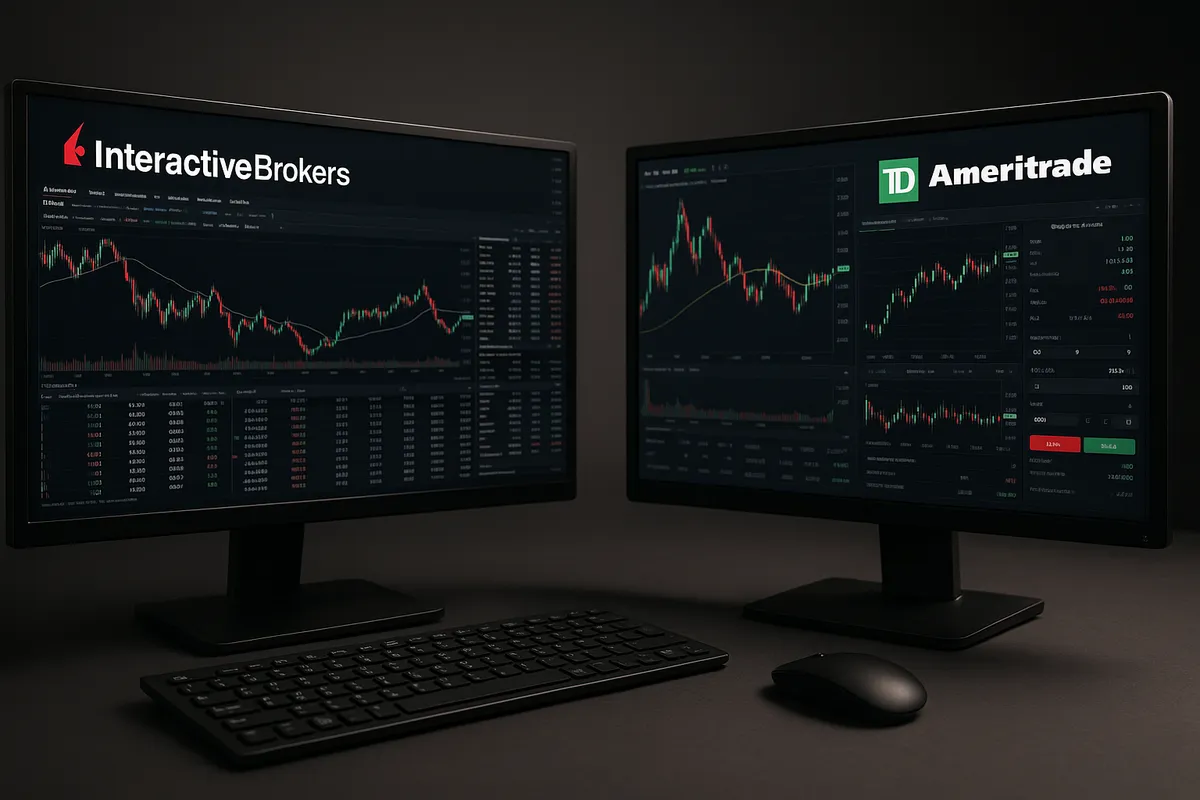

Last updated
Last updated
Two trading giants stand at opposite ends of the broker spectrum. Interactive brokers caters to Professional Traders with complex needs. TD Ameritrade focuses on everyday investors seeking user-friendly tools.
The choice between these platforms affects your Trading Costs, available markets, and overall experience. Each broker targets different trader types with distinct strengths and weaknesses.
This comparison examines pricing, platforms, research tools, and account features. You'll discover which broker fits your trading style and investment goals.

Interactive brokers operates as a discount broker for Active Traders. The company serves institutional clients, hedge funds, and serious retail traders. Their platform prioritizes advanced tools over simplicity.
TD Ameritrade takes a full-service approach. They provide extensive educational content, research reports, and customer support. The platform welcomes beginners while offering professional features.
The fee structures reflect these different approaches. Interactive brokers charges per-share commissions that benefit high-volume traders. TD Ameritrade offers commission-free stock trades but makes money through payment for order flow.
Market access separates these brokers significantly. Interactive brokers connects to exchanges in 34 countries. TD Ameritrade focuses primarily on US stocks, ETFs, and options.
Commission structures differ dramatically between these brokers. interactive brokers uses tiered pricing that rewards volume. TD Ameritrade offers flat-rate pricing that's easier to understand.
| Trading Cost | Interactive Brokers | TD Ameritrade |
|---|---|---|
| Stock Commissions | 5% across all account sizes.$0 | |
| Options | 83% for large accounts. Industry estimates suggest TD Ameritrade charges approximately 12.5% across all account sizes.$0.65 per contract | |
| Futures | $0.85 per contract | $2.25 per contract |
| Account Minimum | $0 | $0 |
| Monthly Fees | $10 if under $100k | None |
Based on typical account structures, Interactive Brokers charges a $10 monthly fee for accounts under $100,000. This fee typically disappears once you reach the threshold or generate $30 in commissions monthly.
Hidden costs favor TD Ameritrade for small accounts. Interactive Brokers adds market data fees ranging from $1-30 monthly. TD Ameritrade includes basic market data at no extra cost.
International trading costs heavily favor Interactive Brokers. They offer direct market access with local exchange rates. TD Ameritrade restricts international trading and charges higher fees.
Platform complexity creates the biggest difference between these brokers. Interactive Brokers provides powerful tools that require learning time. TD Ameritrade offers intuitive interfaces that work immediately.
Trader Workstation (TWS) serves as Interactive Brokers' flagship platform. The interface displays multiple asset classes, advanced charting, and algorithmic trading tools. New users often feel overwhelmed by the extensive features.
TD Ameritrade's thinkorswim platform balances power with usability. The design welcomes beginners while providing professional analysis tools. Most traders adapt to the platform within days.

Mobile trading apps reflect each company's philosophy. Interactive Brokers' mobile app mirrors the desktop complexity. TD Ameritrade's mobile app simplifies trading for phone users.
Order types showcase platform differences clearly. Interactive Brokers offers over 100 order types including complex algorithmic strategies. TD Ameritrade provides 30+ order types covering most trading needs.
Research quality and quantity vary significantly between these platforms. TD Ameritrade provides comprehensive educational content for all skill levels. Interactive Brokers focuses on data and tools over educational materials.
TD Ameritrade's education program includes live webinars, practice trading, and structured learning paths. They offer over 200 educational videos and interactive courses. The content covers basic investing through advanced options strategies.
Interactive Brokers provides limited educational resources but excellent market data. They offer real-time quotes, fundamental analysis, and research reports from multiple providers. The focus stays on actionable trading information.
According to Finder.com, TD Ameritrade scores higher for beginner resources while Interactive Brokers excels in professional research tools.
Third-party research access differs between platforms. Interactive Brokers includes reports from major firms like Refinitiv and Zacks. TD Ameritrade provides Morningstar research and analyst recommendations.
Paper trading capabilities help new traders practice safely. Both brokers offer simulated trading accounts. TD Ameritrade's paper money feature mirrors the real platform exactly. Interactive Brokers provides basic simulation tools.
Account types and features reflect each broker's target audience. Interactive Brokers offers margin accounts, portfolio margin, and professional accounts. TD Ameritrade provides retirement accounts, education savings, and trust accounts.
Margin rates favor Interactive Brokers significantly. Based on typical industry pricing, they offer some of the lowest margin rates in the industry, starting around 4.83% for large accounts. Industry estimates suggest TD Ameritrade charges approximately 12.5% across all account sizes.
Customer support approaches differ completely. TD Ameritrade provides phone support 24/7 with live chat and email options. Interactive Brokers offers limited phone hours and prioritizes online help resources.
Account protection and insurance remain strong at both brokers. Interactive Brokers provides SIPC coverage plus additional Lloyd's of London insurance. TD Ameritrade offers standard SIPC protection for customer accounts.

Global market access creates the largest gap between these brokers. Interactive Brokers connects directly to exchanges worldwide. TD Ameritrade focuses on US markets with limited international options.
Interactive Brokers offers trading in 34 countries across stocks, bonds, currencies, and derivatives. You can trade Japanese stocks, European ETFs, and emerging market bonds from one account. currency conversion happens automatically at competitive rates.
TD Ameritrade restricts international trading to foreign companies listed on US exchanges. You can't access London Stock Exchange or Tokyo markets directly. This limitation affects portfolio diversification strategies.
For traders interested in , international access often determines platform choice. professional traders managing global portfolios typically choose Interactive Brokers for market access.
Interactive Brokers suits active traders with complex needs. Choose this broker if you trade frequently, need international markets, or use advanced strategies. The platform rewards volume with lower costs.
Ideal Interactive Brokers candidates include:
TD Ameritrade works better for casual investors and beginners. Choose this broker if you value education, customer support, and user-friendly tools. The platform excels at helping new traders learn.
Perfect TD Ameritrade users include:
Account size influences platform selection significantly. Interactive Brokers becomes cost-effective above $100,000 due to waived monthly fees. TD Ameritrade serves smaller accounts better with zero commissions and no monthly charges.
Technology infrastructure reveals each company's priorities and capabilities. Interactive Brokers invests heavily in execution speed and connectivity. TD Ameritrade focuses on user experience and educational technology.
Order execution speed favors Interactive Brokers for active strategies. Their direct market access and co-located servers reduce latency. TD Ameritrade routes orders through market makers, adding slight delays.
API access separates professional from retail platforms clearly. Interactive Brokers provides robust APIs for algorithmic trading and portfolio management. TD Ameritrade offers limited API access through thinkorswim.
Mobile technology reflects each platform's design philosophy. Interactive Brokers' mobile apps replicate desktop functionality completely. TD Ameritrade's mobile apps prioritize ease of use over comprehensive features.
Choose Interactive Brokers if trading costs and international access matter most. The platform saves money for active traders while providing global market connectivity. Plan to invest learning time upfront.
Select TD Ameritrade if education and support outweigh cost savings. The platform teaches investing fundamentals while providing professional tools. Customer service helps solve problems quickly.
Many traders use both platforms strategically. Keep retirement accounts at TD Ameritrade for simplicity. Use Interactive Brokers for active trading and international positions. This approach maximizes each platform's strengths.
For newcomers seeking guidance, check our comprehensive guide to . The selection process becomes clearer with structured comparisons.
Account minimums no longer restrict platform choice. Both brokers eliminated minimum balance requirements, making access available regardless of starting capital.Interactive Brokers works best for traders who prioritize cost savings and market access over simplicity. The learning curve pays dividends for active trading strategies.
TD Ameritrade serves investors who value education, support, and ease of use. The platform guides learning while providing professional capabilities.
Consider your trading frequency, international needs, and complexity preferences. Both brokers offer paper trading accounts for risk-free testing before making final decisions.
TD Ameritrade serves beginners better with extensive educational content, user-friendly platforms, and superior customer support. Interactive Brokers requires significant learning time and technical knowledge.
Interactive Brokers offers lower costs for active traders but charges monthly fees under $100,000. TD Ameritrade provides free stock trades but makes money through payment for order flow, potentially affecting execution quality.
Interactive Brokers provides direct access to 34 international markets. TD Ameritrade only allows trading foreign companies listed on US exchanges, significantly limiting international investment options.
TD Ameritrade provides more comprehensive research with Morningstar reports, analyst recommendations, and educational content. Interactive Brokers focuses on professional data feeds and trading tools over research materials.
Both brokers offer strong account protection. Interactive Brokers provides SIPC coverage plus additional Lloyd's insurance. TD Ameritrade offers standard SIPC protection. Both maintain excellent financial stability ratings.
TD Ameritrade provides superior customer service with 24/7 phone support, live chat, and extensive help resources. Interactive Brokers offers limited phone hours and focuses on online self-service support options.

Trading Success Journalist
Sarah Rodriguez chronicles the real experiences of professional traders, from prop firm challenges to scaling successful algorithms. Her compelling narratives reveal the human side of high-stakes trading while maintaining focus on actionable insights and measurable outcomes.