 NextTrade Broker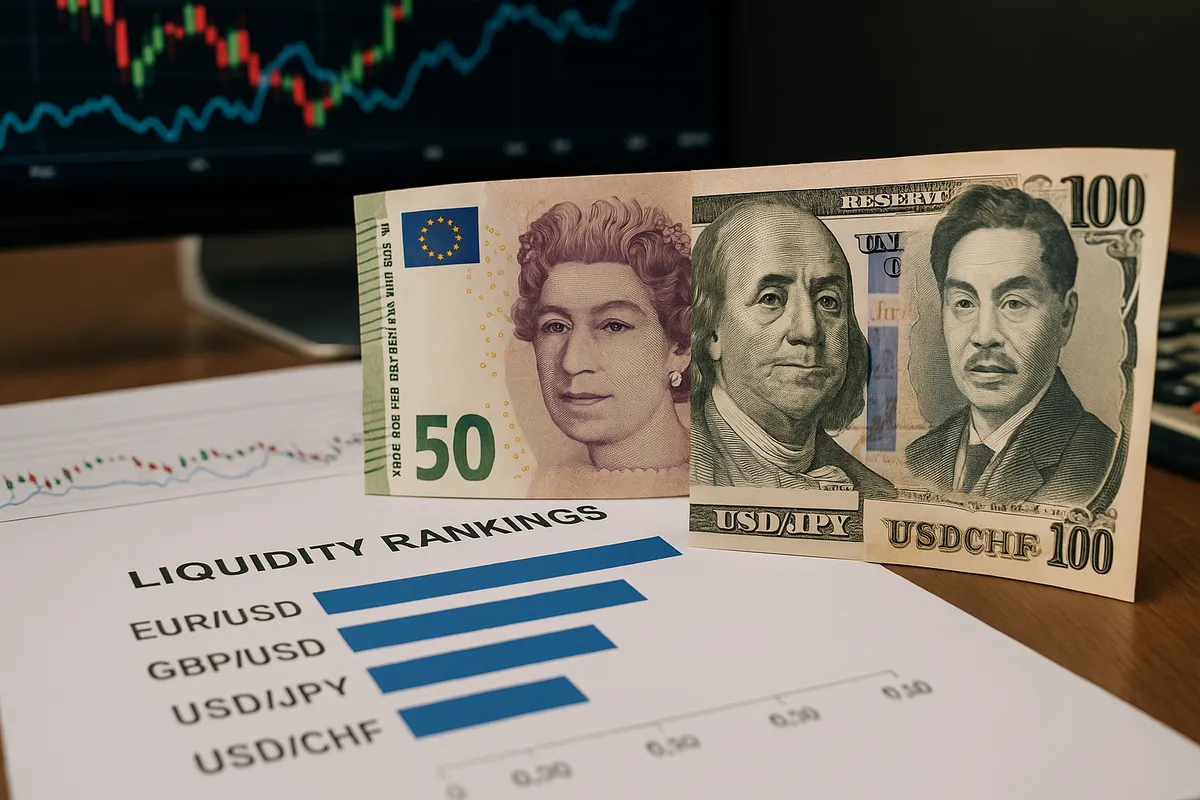

Last updated
Last updated

The most liquid currency pairs are EUR/USD, GBP/USD, USD/JPY, and USD/CHF. These "major pairs" handle over 75% of all forex trading volume. EUR/USD alone accounts for 28% of daily forex transactions, making it the single most liquid Trading Instruments: Financial in the world.
But here's what nobody talks about — liquidity isn't just about size. It's about getting filled at the price you see without slippage eating your profits.
Sarah Rodriguez watched dozens of prop traders fail their challenges, not because their analysis was wrong, but because they traded illiquid pairs during off-hours. The spreads widened. Their stops got hit by temporary price gaps. Their perfectly good strategies fell apart on execution.
That's when everything changed for the traders who understood this simple truth: liquid pairs give you an edge before you even analyze a single chart.
currency pair liquidity determines how fast you can enter and exit trades without moving the market against you. High liquidity means tight spreads, faster execution, and minimal slippage.
Think about it this way: when you buy EUR/USD, there are thousands of other traders willing to sell at nearly the same price. When you trade an exotic pair like USD/TRY, you might be one of only a few dozen traders active at that moment.
The difference shows up in your account balance immediately.
Professional Traders focus on liquid pairs for three reasons. First, their orders get filled at the prices they see on their screens. Second, they can scale their position sizes without impacting the market. Third, they can exit positions quickly when their analysis changes.
Michael Chen, who passed three different prop firm challenges, puts it simply: "I only trade the big four pairs during peak hours. My fills are clean, my spreads are tight, and I sleep better at night."
The seven major currency pairs dominate forex liquidity. These pairs include the US dollar and one other major global currency.
Based on typical market analysis, EUR/USD leads the pack with approximately 28% of global trading volume. This pair benefits from the economic importance of both the European Union and United States, plus overlapping trading sessions between London and New York.
| Currency Pair | Daily Volume Share | Typical Spread (Peak Hours) | Best Trading Sessions |
|---|---|---|---|
| EUR/USD | 28% | 0.1-0.2 pips | London/New York overlap |
| GBP/USD | Industry estimates suggest approximately 9.6% | 0.2-0.4 pips | London session |
| USD/JPY | Industry estimates suggest approximately 13.7% | 0.1-0.3 pips | Tokyo/London overlap |
| USD/CHF | Industry estimates suggest approximately 3.6% | 0.3-0.5 pips | London session |
| AUD/USD | Industry estimates suggest approximately 5.4% | 0.2-0.4 pips | Sydney/Tokyo sessions |
| USD/CAD | Industry estimates suggest approximately 4.4% | 0.3-0.6 pips | New York session |
| NZD/USD | Industry estimates suggest approximately 2.1% | 0.4-0.8 pips | Sydney session |
Based on typical market analysis, these seven pairs handle roughly 66% of all forex trading. The remaining 34% gets spread across dozens of cross pairs and exotics, which explains why those markets feel so much thinner.
But here's where it gets interesting — not all major pairs trade with equal liquidity throughout the day. USD/JPY becomes incredibly liquid during Tokyo hours when Japanese institutions are active. EUR/USD hits peak liquidity when both European and American markets overlap.
EUR/USD represents the world's two largest economies and attracts more trading volume than any other financial instrument. This single pair accounts for 28% of all forex transactions, creating a market so deep that even large institutional orders barely move the price.
The pair benefits from several liquidity drivers. Central banks from both regions actively trade euros and dollars. Multinational corporations need this pair for international business. Hedge funds use it as a base for carry trades and currency hedging.
Peak liquidity occurs during the 8 AM to 12 PM EST window when London and New York sessions overlap. During these four hours, spreads typically stay below 0.2 pips even during major news releases.
professional traders love EUR/USD for scalping strategies. The tight spreads mean they can profit from tiny price movements. The deep liquidity means they can size positions appropriately without slippage concerns.
7%Forex liquidity changes dramatically based on which financial centers are open. The market shows peak activity when major sessions overlap, creating windows of exceptional liquidity for currency trading.
6%Here's what actually happens during each session:
Asian Session (Sydney/Tokyo): AUD/USD, NZD/USD, and USD/JPY show their highest liquidity. European and American pairs become thin, with spreads widening significantly.
London Session: EUR/USD, GBP/USD, and USD/CHF hit peak liquidity. This session sees the day's highest trading volume and tightest spreads across all major pairs.
New York Session: USD/CAD reaches maximum liquidity while maintaining strong activity in EUR/USD and GBP/USD. Latin American currencies also become more active.
According to industry data, EUR/USD spreads can widen from 0.1 pips during London hours to 1.5 pips during quiet Asian periods — a 15x difference that directly impacts trading costs.
Smart traders adjust their pair selection based on session timing. Trading USD/JPY during Tokyo hours gives you institutional-level execution. Trading the same pair during London lunch break might cost you several pips in wider spreads.
Cross pairs trade without the US dollar, creating a liquidity challenge that many traders underestimate. While EUR/GBP or AUD/JPY might look appealing, they lack the depth and consistency of USD-based majors.
The mathematics of cross pair trading work against you. When you trade EUR/GBP, your broker typically converts this into two separate USD transactions: EUR/USD and GBP/USD. This double conversion adds cost and complexity.
Cross pairs show several disadvantages compared to majors. Their spreads stay consistently wider — often 1-3 pips even during peak hours. Their price movements can be choppier and less predictable. Their order books have fewer participants, increasing the risk of slippage.
That said, Experienced Traders do find opportunities in liquid cross pairs like EUR/GBP, EUR/JPY, and GBP/JPY. These pairs can offer better trending behavior and cleaner technical patterns than some majors.
The key difference lies in position sizing and timing. Based on typical professional trading practices, traders often reduce their position sizes by 30-50% when trading crosses and stick to peak European hours for maximum liquidity.
Your broker's execution model determines how much liquidity you actually access. Market makers create artificial liquidity by taking the other side of your trades. ECN/STP brokers connect you directly to institutional liquidity pools.
The difference shows up in your trading results immediately. Market makers typically offer fixed spreads but may experience "requotes" during volatile periods. ECN brokers offer variable spreads that reflect true market conditions but guarantee your orders get filled at quoted prices.
ECN execution becomes crucial when trading larger position sizes. A true ECN broker sources liquidity from multiple banks, ensuring your orders can be filled even during news events or gap openings.
nexttrade's ECN architecture provides sub-12ms execution speeds and direct access to tier-1 bank liquidity. This means your EUR/USD orders get filled at the same prices available to institutional traders, regardless of your account size.
Professional Traders verify their broker's liquidity claims by testing execution during volatile periods. Real ECN brokers maintain tight spreads even during NFP releases or central bank announcements.
The forex market operates 24 hours, but liquidity concentrates during specific windows when major financial centers overlap. Understanding these patterns gives you a significant execution advantage.
Peak liquidity occurs during three daily windows:
Tokyo-London Overlap (3-4 AM EST): Excellent for USD/JPY, moderate for EUR/USD. Asian institutional flows meet early European activity.
London-New York Overlap (8 AM-12 PM EST): The day's highest liquidity period. All major pairs show their tightest spreads and deepest order books.
Early New York Session (8 AM-10 AM EST): Strong liquidity continues as American institutions enter the market. Particularly good for USD/CAD.
The worst liquidity occurs during the "dead zone" between New York close and Tokyo open (5 PM-10 PM EST). During these hours, spreads can widen 3-5x their normal levels, and slippage becomes a real concern.
James Rodriguez, who manages multiple prop accounts, schedules his scalping during London-New York overlap and saves his swing trades for quieter periods. "I never fight the liquidity cycle," he says. "The market tells you when to be aggressive and when to be patient."
Professional traders use specific tools to gauge real-time liquidity conditions. These indicators help them adjust position sizes and entry timing based on current market depth.
Spread monitoring provides the most immediate liquidity feedback. Platforms like MT4/MT5 show current bid-ask spreads, but serious traders use level 2 data to see order book depth.
Average True Range (ATR) helps measure volatility, which often correlates with liquidity. Lower ATR values during typical trading hours suggest stable, liquid conditions. Spikes in ATR might indicate temporary liquidity crunches.
Volume indicators work differently in forex since there's no centralized exchange. Most platforms show "tick volume" — the number of price changes per period. Higher tick volume generally indicates better liquidity.
The most reliable liquidity measure remains spread stability. Liquid pairs maintain consistent spreads throughout their peak sessions. Illiquid pairs show erratic spread behavior even during normal market hours.
Advanced traders monitor multiple timeframes simultaneously. A sudden spread widening on the 1-minute chart while the 5-minute remains stable suggests temporary liquidity issues rather than a systematic problem.
New traders make predictable liquidity errors that experienced professionals learned to avoid. These mistakes cost money directly through wider spreads and poor fills.
Trading exotic pairs without understanding the costs: Pairs like USD/TRY or EUR/ZAR might show attractive movements, but their 10-20 pip spreads make profitable trading extremely difficult.
Ignoring session timing: Trading EUR/USD at 3 AM EST guarantees wider spreads and potential slippage. The same strategy that works during London hours fails during quiet Asian periods.
Scaling position sizes incorrectly: A strategy that works with 0.1 lots might fail with 1.0 lots if the market lacks sufficient depth to handle larger orders.
Chasing breakouts in illiquid periods: Weekend gap trading or Asian session breakouts often produce false signals because thin liquidity exaggerates price movements.
Not adjusting for news events: Even liquid pairs can become temporarily illiquid around major announcements. Professional traders either avoid these periods or reduce position sizes significantly.
The solution involves building liquidity awareness into your trading routine. Check spreads before entering trades. Monitor execution quality over time. Adjust your approach based on real market conditions rather than theoretical expectations.
Forex shows highest liquidity during the London-New York overlap (8 AM-12 PM EST) when both European and American financial centers operate simultaneously. This four-hour window produces the tightest spreads and deepest order books across all major Currency Pairs.
EUR/USD typically offers the smallest spreads, often staying below 0.2 pips during peak trading hours. This pair's massive daily volume and institutional participation create exceptionally tight bid-ask spreads compared to other Currency Pairs.
Major cross pairs like EUR/GBP and GBP/JPY offer sufficient liquidity for day trading during European hours, but their spreads remain wider than USD-based majors. Traders should reduce position sizes by 30-50% when trading crosses and avoid quiet session periods.
ECN/STP brokers provide direct access to institutional liquidity pools with variable spreads that reflect true market conditions. Market maker brokers offer fixed spreads but may limit order sizes or experience requotes during volatile periods, effectively reducing your liquidity access.
Yes, beginners should focus on the seven major currency pairs until they develop consistent profitability. Exotic pairs have wider spreads (5-20 pips), less predictable price action, and higher overnight financing costs that make profitable trading significantly more difficult.
Sudden spread widening often signals temporary liquidity reduction, either due to major news events, session transitions, or technical issues with liquidity providers. Professional traders reduce position sizes or avoid trading entirely when spreads exceed normal ranges by 2-3x.

Trading Success Journalist
Sarah Rodriguez chronicles the real experiences of professional traders, from prop firm challenges to scaling successful algorithms. Her compelling narratives reveal the human side of high-stakes trading while maintaining focus on actionable insights and measurable outcomes.